


.svg)
Onboarding programs are typically designed to help new hires start, but not necessarily to help them settle in.
Forms are completed, system access granted, training modules checked off the list, and yet many new employees still feel unsure, disconnected, or hesitant to ask questions in their first few weeks. That gap shows up in slower ramp-up times, lower engagement, and higher early turnover.
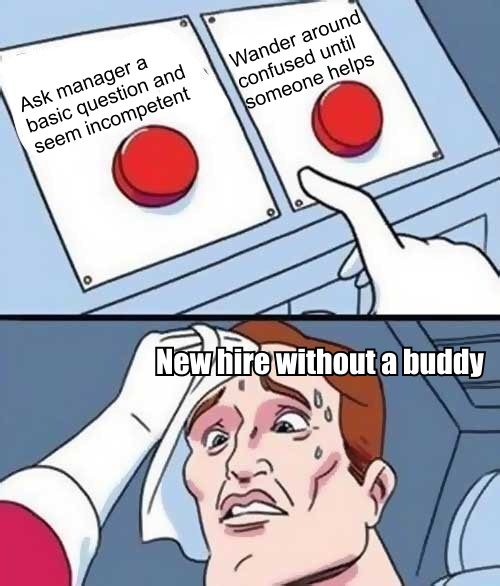
And the numbers don’t lie—the median early turnover rates are nearly 20% across industries. While there are surely other factors at play, a more thoughtful onboarding process can only improve those numbers.
Mentoring makes a huge difference here.
Onboarding mentoring adds a human layer that formal, solitary programs often miss. It helps new hires build confidence faster, understand how work actually gets done, and feel like they’re part of the team.
In this article, let’s explore how you can create an onboarding mentor program that’s impactful without adding too much to HR and L&D’s already full plate.
What is onboarding mentoring?
Sometimes called an onboarding buddy program or mentor buddy system, onboarding mentorship pairs a new hire with a more experienced employee during their first weeks or months on the job. The mentor isn’t there to manage performance or evaluate progress. Instead, they act as a guide and sounding board as your newbie navigates the intricacies of your company.
A good onboarding mentor helps answer questions like:
- Who’s the best person to go to for this?
- How do things usually work around here?
- What does success truly look like in my new role?
This is the kind of context that doesn’t usually show up in those training slide decks but makes a huge difference in how quickly someone feels comfortable and capable.
Onboarding mentorship works best when it’s structured but has some flex to it. Most programs are time-bound—often 30-90 days—and designed to complement manager check-ins, formal training, and role-specific onboarding.
The benefits of a mentor buddy system
The ideal outcome of onboarding is a confident, capable, and productive employee in the shortest time possible. Mentoring helps make that a reality. We’ve already touched on the benefits of work buddies during the onboarding process a little bit, but let’s explore what those look like in practice.
Faster time to productivity
New hires don’t usually struggle because they lack the skills to do the job. They struggle because they don’t yet know where to find the information they need, who to ask for help, or what “good” looks like in their new role. Mentors are there to help remove that friction and uncertainty, setting newbies on the right path to becoming a fully functioning member of the team.
Better early retention
The first 90 days are the make-or-break period. When employees feel unsupported or disconnected early on, they’re more likely to disengage—or leave. A mentor creates an immediate sense of connection and support.
Stronger engagement and belonging
A sense of belonging isn’t something that happens immediately—especially in remote or hybrid employees. Mentors help new hires navigate unwritten norms, build relationships, and feel part of the organization sooner.
More effective learning
Formal onboarding programs are great, but some deliver a lot of information in a very short amount of time, which can get lost in the early excitement. Mentors help reinforce and apply that learning in real situations, making it stick.
Development for mentors, too
Mentoring is great for new hires, but it’s also a meaningful development opportunity for experienced employees, too. Being an onboarding mentor helps those employees build coaching and leadership skills to support their future goals.
Building an effective onboarding mentor program
A mentorship program doesn’t need to be this complex beast but it does need to be intentional. Many well-meaning mentor buddy programs fall flat because expectations aren’t clear or mentors aren’t set up for success.
Here are steps you can take to make sure mentoring becomes a valuable part of your onboarding strategy.
- Be clear about the purpose: Define what onboarding mentoring is meant to support and what it’s not meant to do. Mentors are there to help new hires learn and navigate the organization, not to manage performance or replace managers.
- Choose and support mentors thoughtfully: The best mentors aren’t always the most senior or highest-performing employees. They’re people who are approachable, patient, and genuinely interested in helping others succeed.
- Match with intention: When you can, match mentors and new hires by role, function, or team. Shared context makes conversations more relevant and reduces ramp-up time.
- Connect mentoring to onboarding milestones: Mentoring is most effective when it aligns with what the new hire is experiencing. Suggested check-ins at key moments (like end of week one or 30 days in) help keep conversations focused and useful.
- Measure, learn, adjust: Track outcomes over time and compare cohorts with and without mentoring. Keep track of time to productivity, onboarding NPS, retention, and early performance indicators.
Tips for sustaining an onboarding mentor relationship
Keeping that early momentum is important! If not maintained, those beneficial mentoring relationships can fizzle out and become less effective and impactful to both your new hire and experienced employee.
Here are a few ways to help your onboarding mentor pairs sustain their relationship and keep your program going strong:
- Keep it simple: Encourage informal, regular check-ins instead of rigid schedules. Mentoring works best when it feels natural, not forced.
- Create psychological safety: Reinforce that mentors are a safe first stop for questions and concerns. This helps new hires speak up early, before small issues become bigger ones.
- Recognize mentors: Acknowledging mentor contributions—formally or informally—signals to everyone how much this work matters.
- Build in a clear endpoint: Define when the formal mentoring period ends. This keeps the program itself sustainable while allowing relationships to continue organically if both parties want to.
- Connect to long-term development: Onboarding mentorship is the first step in your broader learning and development strategy. Start connecting the process to further mentoring or internal mobility programs.
Lessons learned from Access Group
So, say you work for a small company where you know everyone—at least in passing. Then, all of a sudden you’re a part of a huge multinational company where you’re in a sea of new faces. Intimidating, right?
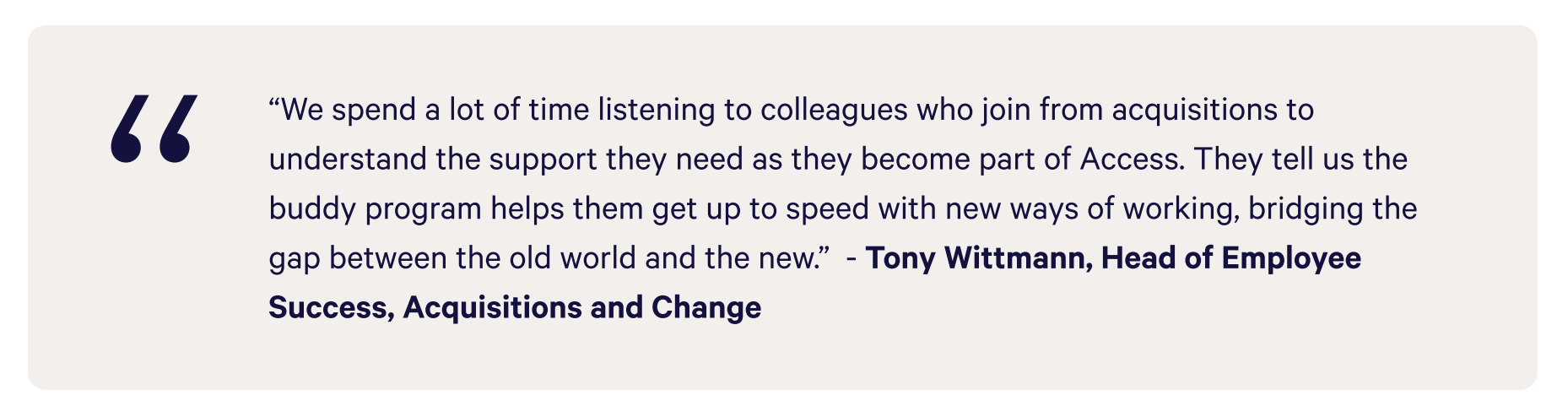
That was a reality for many employees of Access Group, a business management software provider with over 8,000 employees worldwide. Access Group completes many acquisitions per year, ranging from small startups to larger organizations.
While they aim for a smooth integration for those new employees, Access Group saw the need for a solution to help new team members feel informed, engaged, equipped, and, most importantly, connected.
Access Group’s onboarding goals
- Make transitions smoother for employees who join through acquisitions
- Strengthen connections and relationship-building
- Uphold the company’s commitment to an inclusive culture
Partnering with Together, they created a program that supports new employees from the start.
How they achieved those goals
- An employee-led experience: Program participants could specify what they wanted to get out of an onboarding buddy relationship and what they could offer in return.
- Smarter, faster matching: Using Together, Access Group automated matching which saved them a ton of time.
- Meaningful connections, not just matches: Together’s matching tool matches on standard criteria but also shared interests, hobbies, or goals—helping to break the ice early.
- Low effort, high impact: Access Group used pre-built, customizable templates and email scheduling to deliver a personalized experience where employees feel cared for and the program runs smoothly behind the scenes.
Onboarding mentorship results
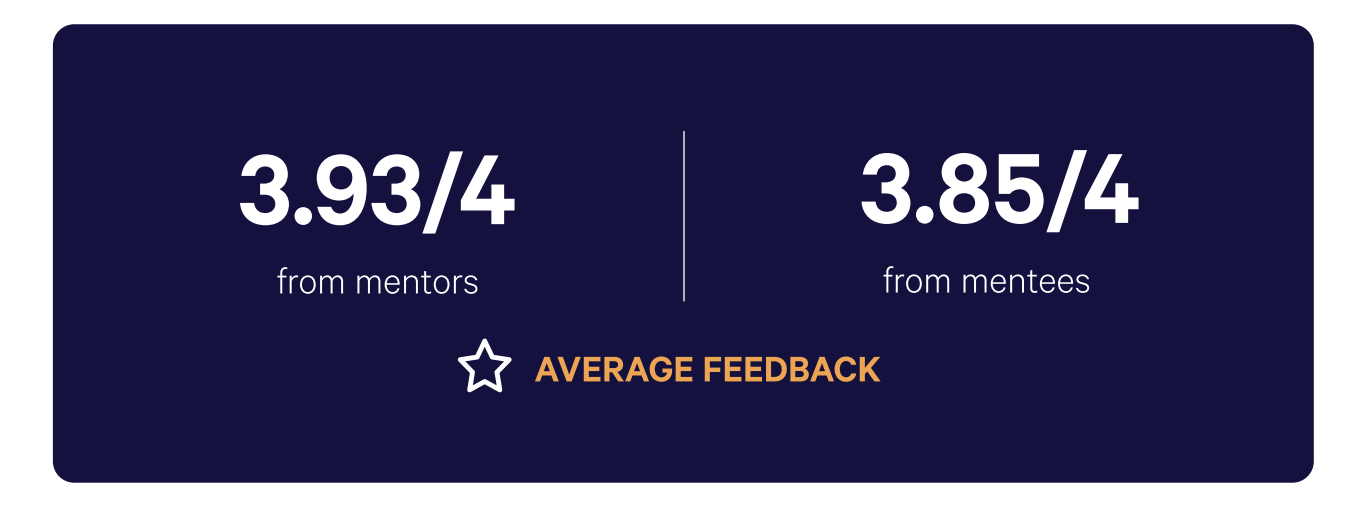
Access Group has been using Together to facilitate their buddy program since August 2023. Here’s a look at both the tangible and intangible results:
- Less administrative work (saving approximately 15 hours per week)
- Better early employee experience, helping new staff find their way around and feel comfortable
- More inclusive culture that sparks fresh ideas and looks at new perspectives
- Positive feedback, mainly around the program helping their transition into Access
Onboarding mentoring matters—let’s get started
Onboarding can be a tricky thing to get right and hiring across roles, locations, and working models makes it more challenging. Mentoring helps fill in the gaps that technology and training alone can’t fix.
Embedding mentoring into onboarding is a practical, people-centered way to improve outcomes that actually matter, like faster ramp-up, stronger engagement, and better retention. When your new hires feel supported early, they’re more likely to stay, grow, and succeed.
Want more insights on how to get your buddy program started? Our Onboarding Mentorship Programs guide has all the information you need to plan, launch, and measure your buddy program—download it to get started.





.svg)